AI video editing for coaches is the process of using artificial intelligence to automatically turn long coaching content such as Zoom calls, webinars, or course lessons into short, engaging videos for platforms like TikTok, Instagram Reels, and YouTube Shorts.
Most coaches already create valuable long-form content, but struggle to consistently edit and publish short videos due to time, technical complexity, and platform overload. As short-form video becomes the primary discovery channel, this gap limits reach, audience growth, and lead generation.
AI video editing solves this by automating the entire repurposing workflow identifying key moments, generating captions, formatting videos for multiple platforms, and enabling consistent publishing without requiring manual editing skills.
In this guide, you’ll learn:
- What AI video editing means for coaches and course creators
- How AI turns long lessons into short, high-performing videos
- Why short-form content drives discovery, trust, and conversions
- How coaches use AI to grow faster with less manual effort
What Is AI Video Editing for Coaches?
AI video editing for coaches refers to the use of artificial intelligence to automatically edit, clip, caption, and format coaching videos for short-form platforms. It allows coaches to repurpose existing long-form content into multiple short videos without manual editing.
What Is Video Repurposing in Coaching?
Video repurposing is the process of transforming one piece of long-form content such as a coaching session, course lesson, or webinar into multiple short videos optimized for social media discovery and audience engagement.
What Is a Micro-Learning Content Funnel?
A micro-learning content funnel uses short, focused video clips to introduce ideas, demonstrate expertise, and guide viewers toward longer content, programs, or paid coaching offers. Short-form videos act as the top-of-funnel discovery layer.
🚧 Why Coaches Struggle With Video Content Today
Most coaches understand the value of video, but turning knowledge into consistent content is where the process breaks down.
Coaching businesses typically rely on long-form formats such as Zoom calls, recorded sessions, webinars, or course lessons. While these formats are rich in value, they are not optimized for how people discover and consume content on modern platforms.
Common challenges include:
- Time constraints: Editing videos manually takes hours each week, pulling focus away from coaching clients and program development.
- Technical complexity: Video editing tools often require learning curves that coaches don’t have time for.
- Inconsistent publishing: Without a repeatable system, posting schedules become irregular, limiting algorithmic reach.
- Platform fragmentation: Each platform requires different formats, aspect ratios, and caption styles.
- Low discoverability: Long videos alone rarely perform well for first-time audience discovery.
As a result, many coaches produce valuable content but fail to turn it into a consistent growth engine. short-form content strategy
🤖 How AI Video Editing Solves This for Coaches
AI video editing removes the manual bottlenecks that prevent coaches from publishing consistently.
Instead of editing each video by hand, artificial intelligence analyzes long-form coaching content and automatically identifies moments that are most likely to engage viewers. These moments are then transformed into short, platform-ready videos.
AI video editing systems typically handle:
- Key moment detection: Identifying highlights, explanations, or impactful statements.
- Automated clipping: Creating short videos from long sessions without manual trimming.
- Captions and text overlays: Adding readable captions that improve retention and accessibility.
- Auto-formatting: Adjusting aspect ratios and layouts for Shorts, Reels, and TikTok.
- Publishing workflows: Enabling scheduling and distribution across multiple platforms.
This allows coaches to focus on teaching and client outcomes while AI handles the repetitive editing and formatting work.
🔁 From Long Lessons to Short-Form Growth
When AI handles video repurposing, coaching content shifts from a one-time asset to a reusable growth system.
A single recorded coaching session can be transformed into multiple short videos, each designed to:
- Introduce a core idea
- Build credibility
- Drive discovery
- Lead viewers toward deeper content or offers
Over time, this creates a consistent presence across platforms without increasing workload.
🛠️ How AI Video Editing Works for Coaches (Step-by-Step)
AI video editing for coaches follows a simple, repeatable workflow that turns existing long-form content into short, high-performing videos without manual editing.
Below is how the process typically works.
Step 1: Upload Long-Form Coaching Content
Coaches start by uploading long-form videos such as:
- Zoom coaching calls
- Course lessons
- Webinars
- Workshop recordings
- Podcast-style training sessions
These videos already contain high-value insights but are usually too long for social media discovery.
Step 2: AI Analyzes the Video for Key Moments
Once uploaded, AI scans the video to understand:
- Speech patterns and emphasis
- Topic changes and explanations
- Moments of clarity, insight, or teaching
Based on this analysis, the system identifies segments that are most likely to perform well as short-form content.
Step 3: AI Creates Short Clips Automatically
From the detected highlights, AI generates multiple short video clips by:
- Trimming long videos into concise segments
- Preserving context so each clip stands on its own
- Maintaining smooth pacing without manual cuts
Each clip is designed to be engaging within the first few seconds. AI video clipping tools
Step 4: Captions and Visual Formatting Are Applied
AI then enhances each clip with:
- Automatically generated captions for accessibility
- Optimized text placement for mobile viewing
- Platform-specific formatting for vertical and square videos
This ensures clips are readable, engaging, and suitable for different platforms.
Step 5: Clips Are Optimized for Multiple Platforms
Short videos are formatted to meet the requirements of:
- TikTok
- Instagram Reels
- YouTube Shorts
Aspect ratios, safe zones, and layouts are adjusted automatically so the same content can be reused across platforms without extra work.
Step 6: Content Is Scheduled and Published Consistently
Instead of posting manually, coaches can schedule clips in advance.
This enables:
- Consistent posting
- Better algorithmic reach
- Reduced daily workload
With AI handling editing and formatting, coaches can maintain a steady content presence while focusing on clients and programs.
🔎 Why This Workflow Matters for Coaches
This step-by-step process turns video creation into a system, not a one-time task.
- One long video → multiple short clips
- One recording session → weeks of content
- One workflow → consistent visibility
For coaches, this means more reach and engagement without spending more time editing.
🎯 Use Cases: How Different Coaches Use AI Video Editing
AI video editing adapts to different coaching niches because the core challenge is the same: valuable knowledge exists, but distribution is inconsistent. Below are common coach types and how AI video editing fits into their workflows.
Business & Startup Coaches
Business coaches often record:
- Strategy calls
- Founder coaching sessions
- Group masterminds
- Webinar-style trainings
AI video editing helps transform these recordings into short clips that explain:
- Common startup mistakes
- Tactical advice
- Frameworks and decision-making insights
These clips work well for attracting founders and operators who are searching for practical, actionable guidance.
Outcome:
More discovery-driven traffic and qualified leads without creating new content from scratch.
Fitness & Wellness Coaches
Fitness and wellness coaches typically create:
- Workout sessions
- Coaching calls
- Educational content on habits, nutrition, or mindset
AI video editing extracts short, focused clips such as:
- Exercise explanations
- Quick habit tips
- Motivation-based insights
Short-form video allows fitness coaches to stay visible daily without filming separate content for each platform.
Outcome:
Higher engagement, better audience retention, and consistent posting across platforms.
Career & Interview Coaches
Career coaches often record:
- Mock interviews
- Resume reviews
- Career strategy sessions
- Live workshops
AI video editing helps convert these sessions into short videos covering:
- Interview answers
- Career growth tips
- Common job search mistakes
These clips perform well because they address high-intent problems that professionals actively search for.
Outcome:
Increased inbound interest from job seekers and professionals exploring coaching services.
Language & Communication Coaches
Language and communication coaches frequently produce:
- Lesson recordings
- Speaking exercises
- Pronunciation demonstrations
AI video editing enables them to repurpose lessons into:
- Short pronunciation clips
- Vocabulary explanations
- Bite-sized communication tips
Short-form videos help reinforce learning while attracting new students organically.
Outcome:
Improved learning reinforcement and wider audience reach.
Course Creators & Educators
Course creators often have:
- Hours of recorded lessons
- Evergreen educational material
- Structured teaching content
AI video editing turns this content into:
- Promotional Shorts
- Educational previews
- Discovery-focused clips that introduce course concepts
Instead of relying solely on ads, educators can use short-form video as an organic discovery channel.
Outcome:
Higher course visibility and more qualified enrollments.
🧠 The Psychology Behind Educational Short-Form Content
Educational short-form content works because it aligns with how people discover, process, and retain information online.
On platforms like TikTok, Instagram, and YouTube Shorts, viewers are not actively searching for long lessons. Instead, they respond to clear ideas delivered quickly, in context, and with minimal friction.
Short Attention Windows Favor Clear Ideas
Most viewers decide whether to continue watching a video within the first few seconds. Short-form educational clips succeed when they present:
- A clear idea immediately
- A specific problem or insight
- A focused explanation without unnecessary detail
AI-edited clips are effective because they isolate these moments from longer recordings and present them without filler.
Repetition Builds Familiarity and Trust
In coaching, trust is built through repeated exposure to ideas, frameworks, and perspectives.
Short-form videos allow coaches to:
- Reinforce the same concepts across multiple clips
- Appear consistently in a viewer’s feed
- Build recognition without overwhelming the audience
Over time, this repetition positions the coach as a familiar and credible authority.
Micro-Learning Matches Modern Consumption
People learn in short bursts. Micro-learning focuses on delivering one concept at a time, making it easier to:
- Understand
- Remember
- Apply
Short educational videos fit naturally into daily scrolling behavior, making learning feel effortless rather than demanding.
Accessibility Increases Engagement
Captions and visual emphasis play a critical role in short-form content. Many viewers watch videos without sound or in distracting environments.
Automatically captioned videos:
- Improve comprehension
- Increase watch time
- Make content accessible to a wider audience
This accessibility directly improves engagement and retention.
Why This Matters for Coaches
Educational short-form content doesn’t replace long-form coaching it complements it.
Short clips act as entry points that:
- Introduce ideas
- Demonstrate expertise
- Guide viewers toward deeper content or paid programs
This psychological alignment is why AI-powered short-form video has become one of the most effective growth channels for coaches.
⚠️ Common Mistakes Coaches Make With Video Content
Even experienced coaches often struggle with video growth not because their ideas lack value, but because of how the content is created and distributed.
Below are common mistakes that limit reach and consistency, along with how to avoid them.
Relying Only on Long-Form Videos
Many coaches publish full-length sessions and expect them to drive discovery. While long-form content is valuable for depth, it rarely performs well for first-time audience reach.
Fix:
Use long-form content as a source asset and repurpose it into multiple short videos designed for discovery.
Editing Everything Manually
Manual editing is time-consuming and difficult to scale. When every clip requires hands-on editing, consistency becomes unsustainable.
Fix:
Use AI to automate clipping, captions, and formatting so content creation becomes repeatable rather than exhausting.
Posting Inconsistently
Irregular posting breaks momentum and reduces algorithmic visibility. Many coaches post only when they have time to edit, leading to long gaps.
Fix:
Batch content and schedule short videos in advance to maintain a consistent presence.
Ignoring Captions and Accessibility
Videos without captions miss a large portion of viewers who watch without sound or prefer reading.
Fix:
Ensure all short-form videos include clear, readable captions to improve engagement and accessibility. AI captions for short-form videos
Using the Same Format Everywhere
Each platform has different viewing behaviors and layout requirements. Reusing the same video without optimization can reduce performance.
Fix:
Format videos specifically for Shorts, Reels, and TikTok using platform-appropriate layouts.
Focusing on Perfection Over Progress
Trying to make every video flawless often delays publishing. In short-form content, clarity and consistency matter more than polish.
Fix:
Prioritize delivering clear ideas consistently rather than chasing perfection.
📈 The Content Multiplication Effect: How Short-Form Compounds Growth
AI video editing turns coaching content into a compounding system rather than a one-time effort.
Instead of recording new videos for every platform, coaches can use a single long-form session as the foundation for weeks of short-form content. repurposing long-form videos
From One Recording to Multiple Assets
A typical coaching workflow might look like this:
- 1 recorded coaching session or lesson
- 10–30 short video clips generated automatically
- Clips distributed across multiple platforms
- Content scheduled over several days or weeks
Each short video acts as a discovery point, introducing ideas to new audiences who would never encounter the original long-form content.
Why Compounding Matters
Short-form platforms reward consistency. When coaches publish regularly:
- Algorithms learn who to show the content to
- Viewers see repeated exposure to ideas and frameworks
- Trust builds over time through familiarity
This creates a compounding effect where each new clip benefits from the momentum of previous posts.
Short-Form as a Distribution Engine
Rather than treating short videos as standalone posts, they function as a distribution layer for coaching knowledge.
Short clips can:
- Drive traffic to longer videos
- Introduce programs and services
- Reinforce core messages repeatedly
Over time, this transforms video from a marketing task into a predictable growth channel.
Why This Works for Coaches
Coaches don’t need to create more content—they need to reuse existing content more effectively.
AI-powered repurposing allows:
- Higher output without additional recording
- Better use of time spent teaching
- Sustainable growth without burnout
🚀 Why Reap Is Built for Coaches
AI video editing works best when it’s designed around how coaches actually create and use content.
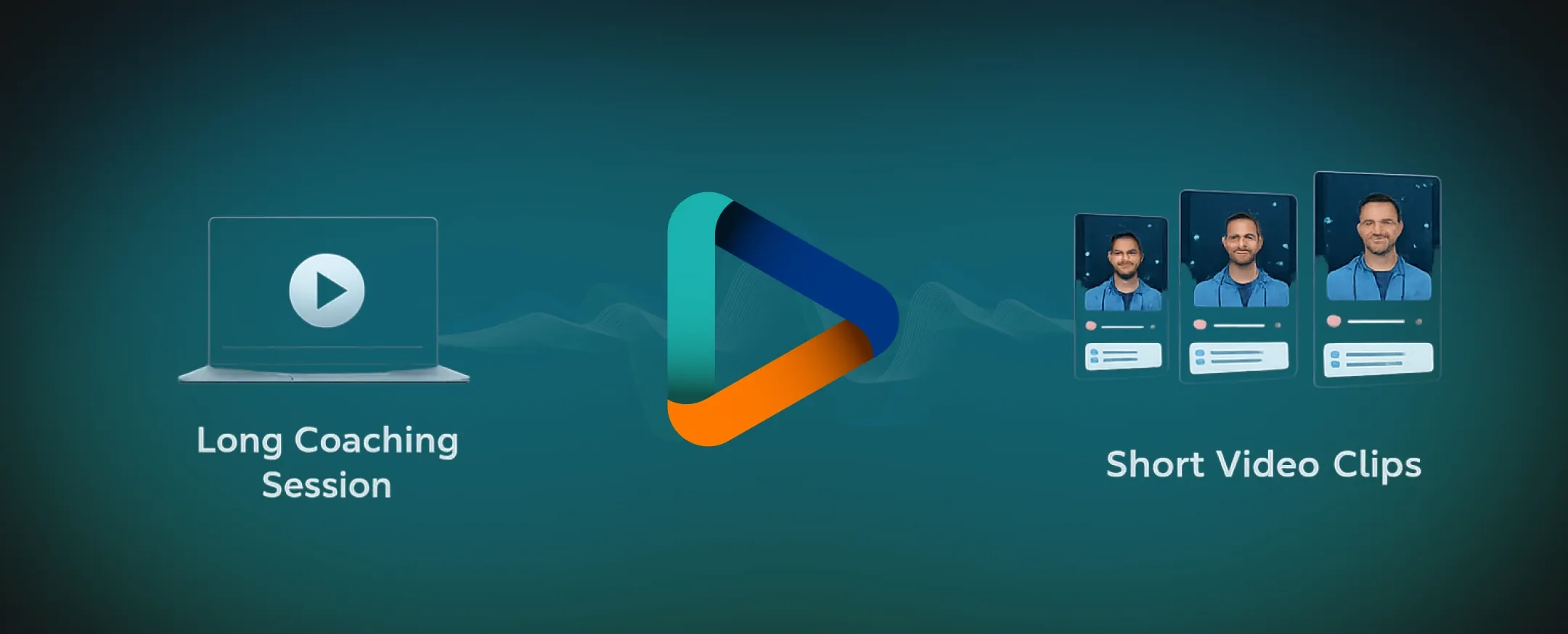
Reap is built specifically to help coaches and course creators turn long-form teaching into consistent short-form content without adding complexity or manual work.
Rather than requiring separate tools for editing, captions, formatting, and publishing, Reap brings these steps into a single workflow.
Designed Around Coaching Workflows
Coaches typically start with:
- Recorded coaching calls
- Course lessons
- Webinars or workshops
Reap is designed to work directly with these formats, allowing coaches to repurpose existing content instead of recording new videos just for social media.
How Reap Supports the AI Video Editing Workflow
Reap helps coaches:
- Automatically generate short clips from long videos
- Add captions that improve clarity and accessibility
- Format videos for TikTok, Instagram Reels, and YouTube Shorts
- Maintain consistent branding across clips
- Schedule content in advance to post consistently
The focus is on reducing repetitive work so coaches can spend more time teaching and serving clients.
Built for Scale, Not Just Speed
For coaches publishing regularly, consistency matters more than one-off viral moments.
Reap is built to support:
- Batch content creation
- Ongoing posting schedules
- Sustainable growth without burnout
This makes AI video editing a repeatable system rather than a temporary productivity hack.
When Reap Makes Sense for Coaches
Reap is especially useful for coaches who:
- Already record sessions or lessons
- Want to increase visibility through short-form video
- Prefer automation over manual editing
- Need a consistent publishing workflow
Instead of replacing coaching expertise, Reap helps amplify it across platforms.
❓ Frequently Asked Questions About AI Video Editing for Coaches
What is AI video editing for coaches?
AI video editing for coaches is the use of artificial intelligence to automatically turn long coaching videos into short, engaging clips. It removes the need for manual editing by handling clipping, captions, formatting, and publishing workflows.
How does AI turn coaching sessions into short videos?
AI analyzes recorded coaching sessions to identify key moments, such as explanations or insights, and automatically converts them into short video clips optimized for social media platforms.
Can AI repurpose Zoom coaching calls or webinars?
Yes. AI video editing tools can repurpose Zoom calls, webinars, workshops, and recorded lessons into multiple short videos without requiring additional recording.
Do coaches need video editing experience to use AI tools?
No. AI video editing is designed to remove technical complexity, allowing coaches to create short-form videos without prior editing skills.
Why is short-form video important for coaches?
Short-form video helps coaches reach new audiences through discovery-based platforms like TikTok, Instagram Reels, and YouTube Shorts. It introduces ideas quickly and builds trust through repeated exposure.
Can AI add captions automatically to coaching videos?
Yes. AI can automatically generate captions, making videos easier to understand, more accessible, and more engaging especially for viewers who watch without sound.
How often should coaches post short-form videos?
Consistency matters more than volume. Many coaches see results by posting several short videos per week using content repurposed from existing sessions.
Can AI video editing help coaches reach a global audience?
Yes. AI-powered captions and formatting make it easier for coaches to reach international audiences and improve accessibility across different regions. multilingual captions
Is AI video editing expensive for coaches?
AI video editing is often more cost-effective than manual editing because it reduces time spent per video and replaces multiple tools with a single automated workflow.
Does AI video editing replace long-form coaching content?
No. AI video editing complements long-form content by turning it into short clips that drive discovery and guide viewers toward deeper programs or coaching offers.
Turn Coaching Content Into Consistent Short-Form Videos
If you already record coaching sessions, lessons, or webinars, AI video editing makes it possible to turn that content into a steady stream of short-form videos without manual editing or extra production time.
Reap helps coaches and course creators repurpose long-form teaching into Shorts, Reels, and TikToks with automated clipping, captions, formatting, and scheduling. So content creation stays consistent without becoming overwhelming.
👉 Explore how Reap works for coaches
What is reap? (reap ai, reap.video)
reap functions as a complete AI video clipping and editor. It automatically generates subtitles, supports branded templates, offers AI voice dubbing and transcript‑based editing to remove filler words, and reframes for different aspect ratios. With multi‑language captions and built‑in scheduling, reap consolidates tools like reels maker, dubbers and voice‑cloning software into one simple workflow.